Table of Contents

OverviewEVERYTHING ABOUT DHI HAIR TRANSPLANT
EVERYTHING ABOUT DHI HAIR TRANSPLANT
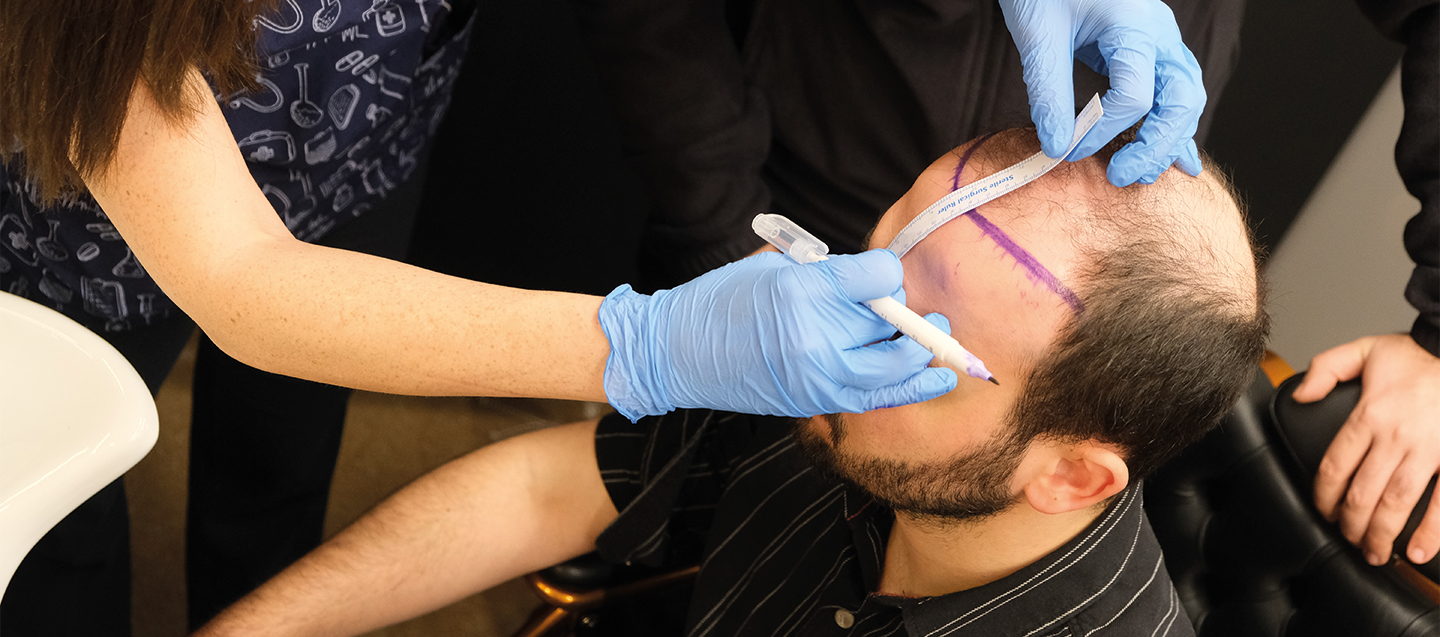
The Direct Hair Implantation (DHI) method is one of the latest hair transplant techniques. It offers a more precise and minimally invasive approach than traditional FUE methods. There are some main differences between FUE and DHI techniques.
The Direct Hair Implantation (DHI) method is a highly advanced form of the FUE hair transplant. The technique utilizes the Choi Implanter Pen to deliver a more precise and efficient procedure.
In DHI, hair follicles are harvested from the donor area without the need to remove a strip of skin. The extracted follicles are then carefully loaded into the Choi Implanter Pen. It simultaneously creates channels in the recipient area and implants the hair follicle. This minimizes trauma to the scalp and reduces the time the grafts spend outside the body, promoting better hair growth.
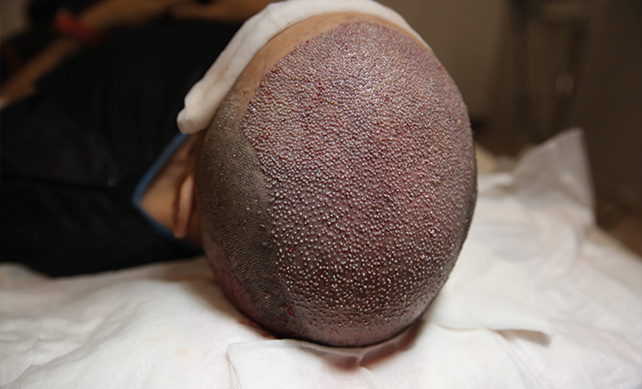
DHI hair transplant surgeries offer a more controlled approach to implanting hair. Therefore, it ensures a natural-looking result with higher graft survival rates compared to traditional FUT methods that involve removing a strip of skin.
The transplanted hair begins to grow within a few months, with full results visible after 9-12 months.
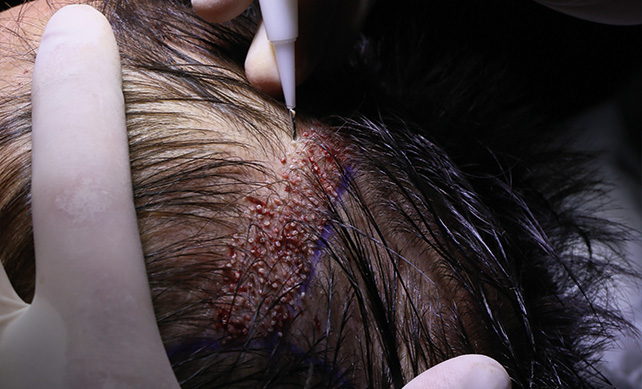
BENEFITS OF THE DHI TECHNIQUE
DHI is suitable for patients with mild to moderate hair loss. The technique can be used for various hair types, including facial hair transplantation. However, it may require more time and expertise than the traditional FUE technique, making it potentially more expensive.
- Increased precision during implantation, leading to a more natural-looking result.
- Reduced trauma to the scalp, resulting in faster recovery time and minimal scarring.
- Shorter time for the hair follicles to stay outside of the body, which may improve their survival rate.
Your feedback helps us improve.
Thank you for your feedback.