Table of Contents

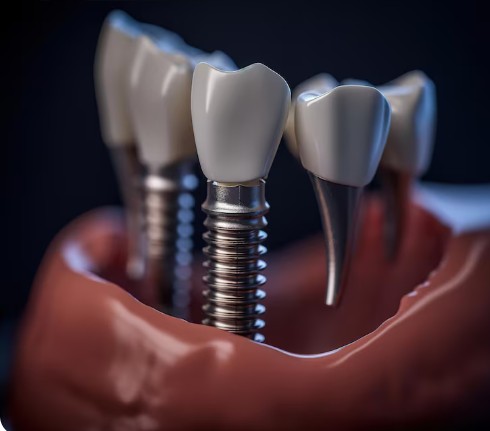
The landscape of full-arch dental rehabilitation has been permanently altered by the advent of immediately loaded implant protocols. For years, the All-on-4 technique has dominated the conversation in restorative dentistry and global medical tourism, celebrated for its ability to circumvent bone grafting and deliver a fixed prosthesis on a foundation of just four strategically angled titanium roots. However, clinical reality dictates that human anatomy is rarely a one-size-fits-all scenario. As prosthodontists and maxillofacial surgeons encounter increasingly complex cases characterized by severe bone atrophy and heavy occlusal forces, the limitations of a four-implant system occasionally become apparent. Enter the All-on-6 protocol, a sophisticated evolution in implantology designed to provide unparalleled structural rigidity, enhanced force distribution, and long-term biomechanical security. Understanding when and why clinicians opt to place two additional implants is critical for patients seeking the most durable restorative outcome.
The Physics of the Anterior-Posterior Spread
To evaluate the clinical necessity of the All-on-6 protocol, one must first examine the physics of the human bite. The masticatory system is capable of generating immense forces, sometimes exceeding 200 pounds of pressure per square inch in the molar regions. When a full-arch dental bridge is anchored to the jawbone, these occlusal forces must be evenly absorbed by the underlying implants to prevent structural failure or bone loss.
A fundamental concept in this force distribution is the Anterior-Posterior (A-P) spread. This refers to the distance between the center of the most anterior (front) implant and the distal aspect of the most posterior (back) implant. In an All-on-4 configuration, because only four implants are used, the posterior implants are often angled to maximize the A-P spread. However, the prosthetic bridge inevitably extends past these final implants to provide a full set of chewing molars. This extension is clinically known as a “cantilever.”
A cantilever acts much like a diving board; when downward pressure is applied to the unsupported end, it creates a massive leveraging force that pulls upward on the anterior implants and pushes heavily on the posterior ones. Over time, excessive cantilever length can lead to biomechanical overload, resulting in screw loosening, acrylic fractures, or even the catastrophic failure of the implant integration. By upgrading to an All-on-6 protocol, surgeons place two additional implants further back in the posterior regions of the jaw. This exponentially increases the A-P spread and virtually eliminates the cantilever effect, ensuring that masticatory forces are directed straight down the long axis of the implants, precisely where the surrounding bone is strongest.
Talk to a Turkeyana consultant
Free evaluation and an all-inclusive quote within 24 hours.
Anatomical Variations: The Maxilla vs. The Mandible
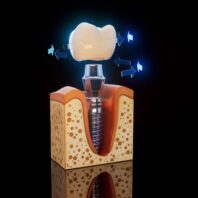
The decision to utilize six implants instead of four is heavily influenced by the specific anatomical density of the patient’s jawbone. The human skull features two distinct types of bone environments. The mandible (lower jaw) is typically composed of dense, thick cortical bone (often classified clinically as Type I or Type II bone). This dense structure provides excellent “primary stability” the mechanical friction holding the implant tight the moment it is placed making the All-on-4 protocol highly successful in the lower arch.
Conversely, the maxilla (upper jaw) presents a vastly different clinical challenge. Maxillary bone is inherently much softer and more porous, often resembling a honeycomb structure (classified as Type III or Type IV trabecular bone). Furthermore, the upper jaw houses the maxillary sinuses, which can expand and diminish the available bone volume following tooth loss. Because the upper bone is softer, a single implant cannot withstand the same load as it could in the denser lower jaw. Therefore, many elite implantologists consider an All-on-6 protocol to be the absolute gold standard for maxillary restorations. Distributing the load across six fixtures in softer bone vastly reduces the microscopic stress placed on the bone-to-implant interface during the critical healing phase, significantly increasing the overall success rate of osseointegration.
Prosthetic Material Optimization and Weight
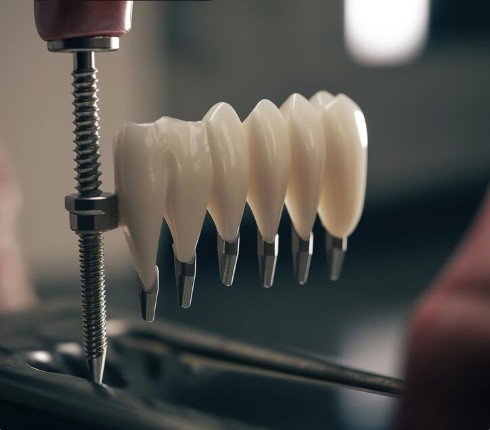
The structural foundation of the jaw also dictates the aesthetic possibilities of the final restoration. Modern dental tourists increasingly demand premium, hyper-realistic materials, specifically monolithic zirconia. Zirconia is celebrated for its incredible durability, stain resistance, and lifelike translucency. However, a full-arch zirconia bridge is significantly heavier than traditional acrylic-over-titanium prosthetics.
Placing a heavy, rigid zirconia bridge onto a foundation of only four implants can create excessive micromovement, especially if the bone density is not optimal. The All-on-6 system provides the robust, unwavering framework required to safely support the weight and rigidity of a full zirconia arch. This ensures that the patient does not have to compromise on the aesthetics or longevity of their new smile due to foundational limitations.
The Principle of Clinical Redundancy
In complex medical engineering, the concept of “redundancy” refers to the inclusion of extra components that are not strictly necessary to functionality, but serve as a fail-safe in case of component failure. The All-on-6 protocol applies this exact principle to restorative dentistry. If a patient with an All-on-4 prosthesis experiences the failure of a single implant whether due to localized infection, trauma, or poor healing the entire structural integrity of the bridge is compromised, and the prosthesis will likely fail.
With an All-on-6 configuration, the biomechanical safety net is vastly expanded. The loss of a single implant out of six rarely results in the loss of the bridge. The remaining five implants are generally more than capable of continuing to support the restoration, effectively converting the system into an “All-on-5” setup without requiring the patient to undergo a massive secondary surgery or endure a period without teeth. For patients traveling internationally, this built-in safety margin provides an invaluable level of psychological peace of mind.
Determining the precise architectural requirements for a full-arch rehabilitation requires an institution that prioritizes evidence-based diagnostics over a generalized, assembly-line approach to dentistry. Turkeyana excels in this highly customized medical frontier. By utilizing ultra-high-definition 3D Volumetric Tomography, the elite surgical board at Turkeyana meticulously evaluates the exact bone density, sinus anatomy, and occlusal force distribution of every individual patient before a surgical plan is even drafted. This exhaustive diagnostic protocol ensures that patients are never forced into an inadequate framework. Whether the clinical data dictates the streamlined efficiency of an All-on-4 or the superior biomechanical rigidity of an All-on-6 protocol, Turkeyana executes the procedure with uncompromising precision. By pairing internationally accredited maxillofacial surgeons with the world’s most advanced implant systems, the clinic guarantees that every global patient receives a restorative foundation mathematically engineered for absolute longevity and unshakeable confidence.
Your feedback helps us improve.
Thank you for your feedback.