Table of Contents

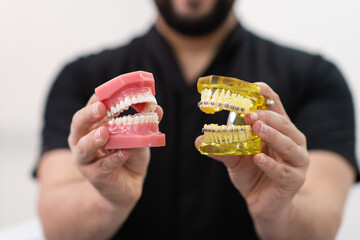
The demographic landscape of orthodontic treatment has undergone a profound transformation in recent years. Historically viewed as a rite of passage for adolescents, orthodontic rehabilitation is now highly sought after by adults seeking to correct functional bite issues or achieve aesthetic harmony. This shift is largely driven by advancements in dental technology that offer more discreet and efficient treatment modalities. However, when navigating the landscape of adult orthodontics, patients are frequently presented with two primary pathways: traditional fixed appliances (braces) and clear aligner therapy. Understanding the clinical distinctions, biomechanical limitations, and lifestyle implications of each system is paramount for making an informed medical decision.
The Biomechanics of Orthodontic Tooth Movement
To evaluate the efficacy of any orthodontic system, one must first understand the fundamental biology of how teeth traverse through solid bone. Regardless of whether a clinician utilizes metal wires or thermoplastic trays, the underlying cellular mechanism remains identical. The tooth is suspended in the alveolar bone by the periodontal ligament (PDL). When sustained, controlled mechanical force is applied to a dental crown, it compresses the PDL on one side and stretches it on the opposite side.
This pressure initiates a complex inflammatory response. On the compressed side, specialized cells called osteoclasts break down the bone tissue to create space for the advancing tooth. Conversely, on the tension side, osteoblasts generate new bone to fill the void left behind. This delicate equilibrium of bone resorption and deposition allows the tooth to migrate safely. In adult patients, this process can be slightly slower than in adolescents due to increased bone density and the absence of active skeletal growth, making the precision of the applied force critical to preventing root resorption or periodontal damage.
Talk to a Turkeyana consultant
Free evaluation and an all-inclusive quote within 24 hours.
Traditional Fixed Appliances: The Standard of Biomechanical Control
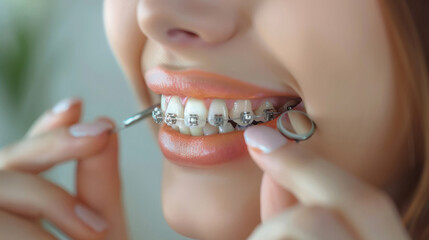
Traditional braces remain the undisputed gold standard for treating severe, complex malocclusions. This system comprises brackets—typically fabricated from high-grade stainless steel or aesthetic ceramics—that are bonded directly to the facial or lingual surfaces of the teeth. These brackets act as handles, while the active force is delivered by a highly engineered archwire meticulously tied into each bracket.
The primary clinical advantage of fixed appliances lies in their unparalleled three-dimensional control. The clinician maintains absolute authority over the precise movement of the tooth root, not just the visible crown. For adults presenting with severe crowding, significant vertical discrepancies (such as a deep overbite or open bite), or extreme tooth rotations, fixed braces provide the continuous, targeted torque necessary to achieve structural harmony. Furthermore, because the appliance is bonded permanently for the duration of the treatment, the success of the outcome is not entirely dependent on the patient’s daily compliance.
Clear Aligner Therapy: The Convergence of Digital Precision and Aesthetics
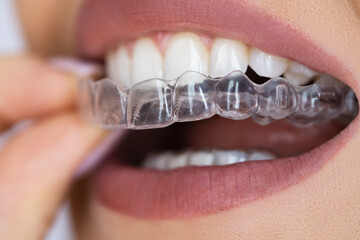
Clear aligners represent a paradigm shift in orthodontic delivery, leveraging sophisticated CAD/CAM (Computer-Aided Design and Computer-Aided Manufacturing) technology. Instead of a single continuous wire, the patient receives a series of custom-fabricated, transparent thermoplastic trays. Each tray in the sequence is engineered to apply a pre-calculated amount of force, systematically guiding the dentition toward its final position.
A common misconception is that aligners function solely as smooth plastic molds. In reality, the biomechanical efficacy of clear aligners relies heavily on “attachments”—small, tooth-colored composite resin bumps bonded to specific teeth. These engineered anchor points provide the aligner with the necessary grip to execute complex movements, such as extruding a tooth or rotating a cylindrical premolar. While highly effective for mild to moderate crowding and spacing issues, aligners often face biomechanical limitations when addressing severe skeletal discrepancies or closing massive extraction spaces, requiring careful case selection by the treating orthodontist.
Periodontal Implications and Lifestyle Factors
For the adult orthodontic patient, preserving periodontal health during treatment is a paramount medical concern. Adults are statistically more susceptible to gingivitis and periodontitis, and the introduction of orthodontic appliances can complicate oral hygiene protocols. Traditional braces present a significant challenge in this regard; the intricate network of brackets and wires creates highly retentive areas for cariogenic plaque and calculus to accumulate. Patients require specialized tools, such as interdental brushes and floss threaders, and rigorous daily hygiene to prevent decalcification (white spot lesions) and gingival inflammation.
Conversely, the removable nature of clear aligners offers a distinct periodontal advantage. Patients can maintain their standard brushing and flossing routines without mechanical obstruction, significantly reducing the risk of treatment-induced gingival disease. However, this removability introduces the critical factor of patient compliance. For the biological mechanism of tooth movement to remain active, aligners must be worn for an absolute minimum of 22 hours per day. Failure to adhere to this strict regimen results in stalled progress, ill-fitting subsequent trays, and severely prolonged treatment timelines. Additionally, adults must be mindful of their dietary habits, as aligners must be meticulously removed before consuming anything other than plain water to prevent warping the plastic or trapping acidic and sugary liquids against the vulnerable enamel.
Navigating the complexities of adult orthodontics requires a nuanced understanding that prioritizes both structural function and sophisticated aesthetics. The decision between clear aligners and fixed appliances should never be dictated by trend, but rather by a comprehensive, digitally guided diagnostic assessment. In the rapidly expanding landscape of global health tourism, Turkeyana distinguishes itself by offering a profoundly medical approach to aesthetic transformations. By utilizing state-of-the-art 3D cephalometric imaging and intraoral scanning technology, the elite orthodontic specialists at Turkeyana meticulously evaluate the skeletal architecture and periodontal health of every international patient. Whether a case demands the biomechanical rigor of aesthetic ceramic braces or the digital precision of a customized clear aligner system, Turkeyana engineers a bespoke treatment protocol designed to integrate seamlessly into an adult lifestyle. For those seeking to correct their bite and elevate their smile with absolute clinical confidence, Turkeyana provides an unparalleled standard of international care, ensuring the journey toward a flawless, functional dentition is as seamless and sophisticated as the final result.
Your feedback helps us improve.
Thank you for your feedback.