Table of Contents
- Overcoming Dental Anxiety
- The Biology of Fear: Why We Hate the Dentist
- The Magic of “Twilight Dentistry”: IV Sedation
- The “No-Needle” Revolution
- The Sensory Shift: Noise-Canceling and Aromatherapy
- The “Gag Reflex” Solution
- The Psychology of Control: The “Stop” Button
- Why Travel Reduces Anxiety
- Frequently Asked Questions (FAQ)
- A New Chapter of Calm

Overcoming Dental Anxiety
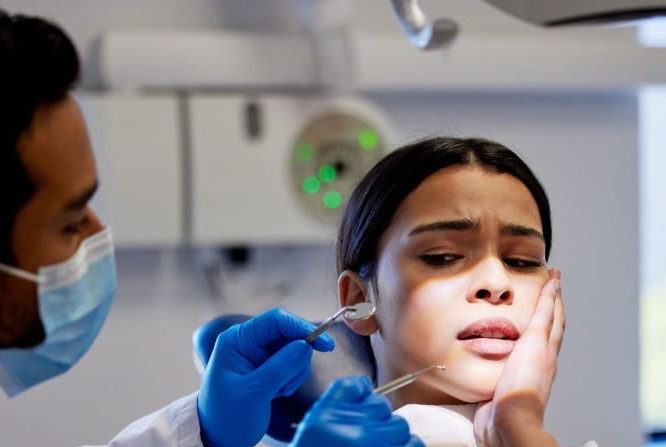
For millions of people around the world, the dentist’s chair is not a place of healing; it is a place of primal fear. The clinical smell, the high-pitched whine of the drill, the feeling of vulnerability while lying back these sensory triggers can induce a panic response that is hard to control. This condition, known as Dentophobia or dental anxiety, is one of the most common medical phobias in existence. It causes people to delay necessary treatment for years, often turning minor issues (like a small cavity) into major crises (like tooth loss) simply because the fear of the appointment outweighs the pain of the toothache.
But as we embrace the medical advancements of 2026, we have good news: the era of “white-knuckling” through a dental appointment is over. Modern dentistry has recognized that the patient’s mind must be treated with the same care as their teeth. The industry has shifted from a purely clinical approach to a “comfort-first” philosophy. Today, we have a sophisticated arsenal of sedation techniques, technological silencers, and psychological protocols designed to ensure that a visit to the dentist is no more stressful than a visit to a spa. If fear has been holding you back from the smile you deserve, it is time to discover how 2026 technology has rendered dental anxiety obsolete.
The Biology of Fear: Why We Hate the Dentist
To overcome fear, we must understand it. Dental anxiety is often rooted in a loss of control. When you are in the chair, you cannot see what is happening, you cannot speak clearly, and your personal space is being invaded. This triggers the amygdala the lizard brain responsible for the “fight or flight” response. It pumps cortisol and adrenaline into your system, making your heart race and your muscles tense.
In the past, dentists often ignored this, focusing only on the mechanical task of fixing the tooth. In 2026, we understand that a stressed patient is a difficult patient to treat. Stress increases pain perception. If your adrenaline is high, local anesthesia (the numbing shot) actually works less effectively. Therefore, managing anxiety isn’t just “nice to have”; it is a medical prerequisite for a successful procedure. By lowering the patient’s baseline stress, we ensure better clinical outcomes, faster healing, and a more pleasant experience for everyone involved.
Talk to a Turkeyana consultant
Free evaluation and an all-inclusive quote within 24 hours.
The Magic of “Twilight Dentistry”: IV Sedation
The most significant game-changer for high-anxiety patients and those undergoing extensive makeovers like Hollywood Smiles or Implants is IV Sedation, colloquially known as “Twilight Dentistry.”
This is not general anesthesia. You are not “unconscious” in the way you would be for heart surgery. You do not need a ventilator to breathe. Instead, a sedative is administered intravenously.
- The Feeling: You enter a state of profound relaxation. You are technically awake and can respond to commands like “open your mouth,” but you simply do not care. The anxiety center of your brain is temporarily switched off.
- The Amnesia Effect: The most beloved side effect of IV sedation is anterograde amnesia. You might be in the chair for four hours while the dentist preps a full set of veneers, but to you, it will feel like 15 minutes. You will likely have little to no memory of the sounds, the smells, or the procedure itself. You wake up feeling like you just had a deep, restful nap, and the work is done.
In 2026, IV sedation is the gold standard for dental tourism. It allows us to condense multiple appointments into a single session. We can extract teeth, place implants, and prep veneers all in one go, while the patient floats in a state of calm. It turns a marathon into a sprint.
The “No-Needle” Revolution
For many, the fear isn’t the drill; it’s the needle. The irony of fearing the shot that stops the pain is not lost on dentists, but the phobia is real (Trypanophobia).
2026 technology has largely solved this.
- Topical Numbing: We use high-strength gels that numb the gum tissue completely before any needle touches it.
- Computer-Controlled Delivery (The Wand): A major cause of pain from an injection is not the needle itself (which is hair-thin), but the pressure of the fluid entering the tissue too fast. Computer-controlled devices (like The Wand) regulate the flow of the anesthetic drop-by-drop, below the threshold of pain perception.
- Vibration Distraction: Devices that vibrate the gum while injecting confuse the nerve pathways (Gate Control Theory), blocking the pain signal from reaching the brain. Most patients in 2026 say, “I didn’t even feel it happen.”
The Sensory Shift: Noise-Canceling and Aromatherapy
The environment of the dental clinic has undergone a radical redesign. The sterile, cold, frightening clinics of the 90s are gone. Modern high-end clinics look and smell like luxury hotel lobbies.
- Olfactory Architecture: The infamous “dentist smell” (usually caused by Eugenol or acrylics) is aggressive. Clinics now use advanced HVAC systems and aromatherapy (lavender, bergamot) to neutralize clinical odors and trigger a relaxation response in the brain’s limbic system.
- Audio Control: The high-pitched whine of the air turbine drill is a major trigger. In 2026, we will use Electric Handpieces which are significantly quieter and smoother, removing the “vibration” that rattles the skull. Furthermore, patients are encouraged to wear high-fidelity noise-canceling headphones, watching Netflix or listening to meditation tracks during the procedure. When you remove the sound of the work, you remove 50% of the fear.
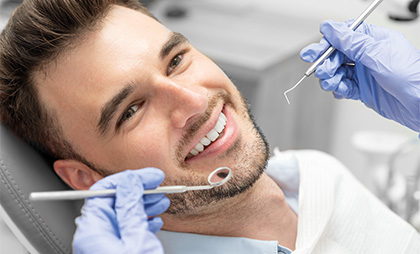
The “Gag Reflex” Solution
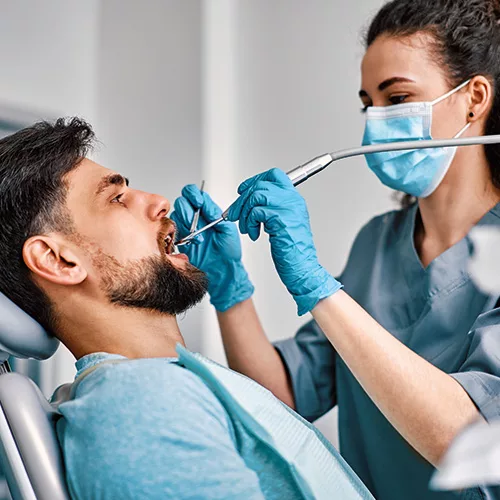
A severe gag reflex is a common source of embarrassment and anxiety. Patients fear they will vomit or choke during the procedure. This is a physiological reflex, not a character flaw, but it makes dentistry a nightmare.
Sedation is the ultimate cure for a sensitive gag reflex. It relaxes the muscles of the throat and dampens the reflex arc. Furthermore, the shift to Digital Impressions (using an intraoral scanner wand instead of those trays filled with goopy, choking putty) has eliminated the number one trigger for gaggers. We can scan a full mouth in 2 minutes without anything touching the back of the throat.
The Psychology of Control: The “Stop” Button
Beyond drugs and tech, the most effective anxiety tool is the restoration of agency. A good dentist in 2026 establishes a “Stop Signal” (usually raising the left hand) before doing anything.
This promise * “If you raise your hand, I will stop immediately, no questions asked”* rewires the power dynamic. The patient is no longer a passive victim; they are the pilot. Knowing they can stop the procedure usually means they don’t feel the need to. It builds a bridge of trust. In the context of medical tourism, where you are meeting a new doctor in a new country, this communication protocol is essential. It is the foundation of the doctor-patient relationship.
Why Travel Reduces Anxiety
Counter-intuitively, traveling for dental work can actually help reduce anxiety. When you fit a dentist appointment into your regular work week, you are carrying the stress of the commute, the deadline you have at 4 PM, and the kids you need to pick up. Your cortisol baseline is already high.
When you travel for a “Dental Vacation,” you have stepped out of your daily pressure cooker. You are in a nice hotel. You have no meetings. You are in a mindset of self-care. This “Vacation Mode” lowers your blood pressure and makes you more receptive to sedation and relaxation. You aren’t squeezing the appointment in; the appointment is the purpose, and there is ample time to recover and relax afterwards.
Frequently Asked Questions (FAQ)
- Is IV Sedation safe?
Yes, extremely. In 2026, IV sedation will be monitored with hospital-grade equipment. We track your heart rate, blood pressure, and oxygen saturation (SpO2) continuously. An anesthesiologist or a specialized sedation dentist is present to manage the dosage. The drugs used (typically midazolam or propofol) have a short half-life, meaning they leave your system quickly once the drip stops.
- Can I travel alone if I choose sedation?
This is a critical logistical point. If you have IV sedation, you are considered legally intoxicated for several hours afterward. You cannot drive, and you should not navigate a strange city alone immediately post-op. However, in our “Concierge Model,” this is handled. Our VIP transfer team escorts you from the dental chair directly to your hotel room door, ensuring you are safe and settled. You are never left to fend for yourself while groggy.
- Will I feel pain during the sedation?
No. Sedation is not a painkiller itself; it is an anxiety killer. However, we combine it with local anesthesia (numbing shots). Because you are sedated, you won’t mind the shots, and once the area is numb, you feel nothing. The combination ensures a completely pain-free experience.
- What if I have a heart condition or high blood pressure?
Interestingly, sedation is often safer for patients with high blood pressure than no sedation. Anxiety causes blood pressure to spike, which is risky. Sedation keeps the blood pressure stable and low. However, a full medical history review is mandatory before approval to ensure no drug interactions.
- How much extra does sedation cost?
Compared to the cost of the full cosmetic procedure, the cost of sedation is marginal. In many comprehensive “Full Mouth Makeover” packages, IV sedation is included or offered as a reasonably priced add-on. Given that it allows the surgeon to work faster and more precisely (because the patient is perfectly still), it is an investment that pays for itself in quality and comfort.
A New Chapter of Calm
Fear should not be the barrier between you and the health you deserve. The days of dreading the dentist are a relic of the past. In 2026, we have the tools to ensure that your journey to a new smile is peaceful, dignified, and entirely free of pain. We invite you to view your dental appointment not as a trial to be endured, but as a restful pause in a busy life a few hours of quiet “twilight” from which you wake up with a transformed smile. In Turkeyana, your comfort is our priority. We specialize in treating the person, not just the teeth, ensuring that your strongest memory of the experience will not be fear, but the relief of finally being taken care of.
Your feedback helps us improve.
Thank you for your feedback.