How to Achieve Natural-Looking Perfection
In the early days of cosmetic dentistry, the goal was simple: perfection. But “perfection” was often interpreted as mathematical symmetry teeth that were perfectly straight, perfectly white, and perfectly uniform. The result? Smiles that looked like they were stamped out of a factory line. They were “piano keys” opaque, flat, and unmistakably artificial. If you walked into a room in 2010 with veneers, everyone knew it.
Fast forward to 2026, and the aesthetic paradigm has shifted dramatically. We have moved from the era of “Look at my teeth!” to the era of “I can’t believe those aren’t your teeth.” The ultimate compliment for a cosmetic dentist today is for their work to go unnoticed. We are chasing Hyper-Realism. This is the art of creating a smile that is technically flawless yet possesses the subtle nuances, translucencies, and textures of organic nature. Achieving this requires more than just money; it requires an understanding of light, biology, and the materials that bridge the gap between art and medicine.
The “Uncanny Valley” of Teeth
To understand how to get right veneers, you must understand what makes wrong veneers look so unsettling. Humans are evolutionarily programmed to spot artificiality. When we see a set of teeth that are too opaque (blocking light), too monochromatic (one flat shade of white), or too smooth, our brain registers it as “fake.” This is the dental version of the “Uncanny Valley”—something that looks almost human, but not quite, creating a subconscious rejection.
Natural teeth are not white blocks. They are complex prisms.
- Translucency: The edge of a natural tooth (the incisal edge) is almost like frosted glass; you can see light pass through it.
- Gradient: A real tooth is darker near the gum (where the dentin is thickest) and gets brighter and more transparent toward the bottom.
- Texture: If you look at a teenager’s tooth under a microscope, it has ridges, grooves, and lobes. It is not a smooth bathroom tile.
In 2026, achieving “Natural-Looking Perfection” means replicating these imperfections intentionally. We use ceramic materials that mimic the light-scattering properties of natural enamel. We add “halo effects” at the edges. We even sculpt microscopic texture onto the surface so that when a camera flash hits the tooth, the light dances rather than reflecting in a harsh, flat glare.
The Rise of E-max and Feldspathic
The reason veneers look better in 2026 than they did a decade ago is largely due to material science. In the past, porcelain had to be fused to metal to be strong enough, which made it look dull. Today, we work with Lithium Disilicate (E-max) and Feldspathic Porcelain.
E-max: This is the workhorse of modern aesthetics. It is a glass-ceramic that is incredibly strong (400-500 MPa) yet highly translucent. It can be pressed as thin as 0.3mm, allowing it to be bonded over teeth with minimal drilling.
Feldspathic Porcelain: This is the “Old Master” technique, still revered in 2026 for the most demanding aesthetic cases. It involves a master ceramist hand-layering powder and liquid porcelain onto a foil, firing it in an oven layer by layer. It is weaker than E-max but offers the ultimate depth of color. It is often used for “No-Prep” veneers where the goal is to add volume without touching the natural tooth.
Choosing the right material is the first step. If you have dark underlying teeth, you need a slightly more opaque E-max to mask the color. If you have healthy teeth and just want to change the shape, Feldspathic offers the most hyper-realistic depth.
The “Cutback” Technique: Painting with Ceramics
How do we avoid the “chiclet” look? We use the Cutback and Layering Technique.
Cheap veneers are “monolithic”—they are milled from a single block of white zirconia and polished. They look like plastic.
High-end veneers in 2026 are different. The technician mills the basic shape, but then physically cuts back the outer layer of the porcelain before it is fired. They then hand-paint internal stains—adding hints of amber near the neck to mimic warmth, and hints of blue/grey at the tip to mimic transparency. They then layer clear ceramic over these stains.
This creates “Depth of Field.” When you look at the veneer, you aren’t looking at the surface; you are looking into the tooth. The color comes from within, just like a natural tooth. This 3D effect is what separates a $500 smile from a $5,000 smile. It is the difference between a poster and an oil painting.
The “No-Prep” Myth vs. Reality
One of the most confusing topics for patients is the preparation of the teeth. Social media is full of horror stories of teeth being filed down to tiny “shark pegs.” This is outdated and aggressive dentistry (usually for crowns, not veneers).
The philosophy of 2026 is Biomimetic Preservation. We want to save as much enamel as possible. Why? Because porcelain bonds to enamel 10 times stronger than it bonds to the softer dentin underneath. Keeping your enamel is the key to longevity.
- Minimal Prep: This is the standard. We remove a microscopic layer (0.3mm to 0.5mm) from the front and bottom edge. This creates a “path of insertion” so the veneer doesn’t look bulky. It’s about the thickness of a contact lens.
- No-Prep: In specific cases (like small teeth or gaps), we add porcelain without removing any tooth structure. This is reversible and highly desirable, but only possible if your teeth are aligned and small to begin with.
The “Social Six” vs. The Full Arch
How many veneers do you need? This is a question of “Buccal Corridors.”
Stand in front of a mirror and smile your widest smile. Count how many teeth you see.
For most people, it’s 8 or 10 top teeth.
- The Social Six: Restoring only the front 6 teeth (canine to canine). This is cost-effective but risky. If your premolars (the teeth behind the canines) are dark or narrow, your new white front teeth will stand out, and the back of your mouth will look like a dark cave.
- The Broad Smile (8-10): In 2026, the trend is for a “Fuller” smile. By placing veneers on the premolars (teeth 4 and 5), we can “widen” the smile, pushing the teeth out to fill the corners of the mouth. This provides better support for the cheeks and creates that radiant, wide “Julia Roberts” effect.
Managing Expectations
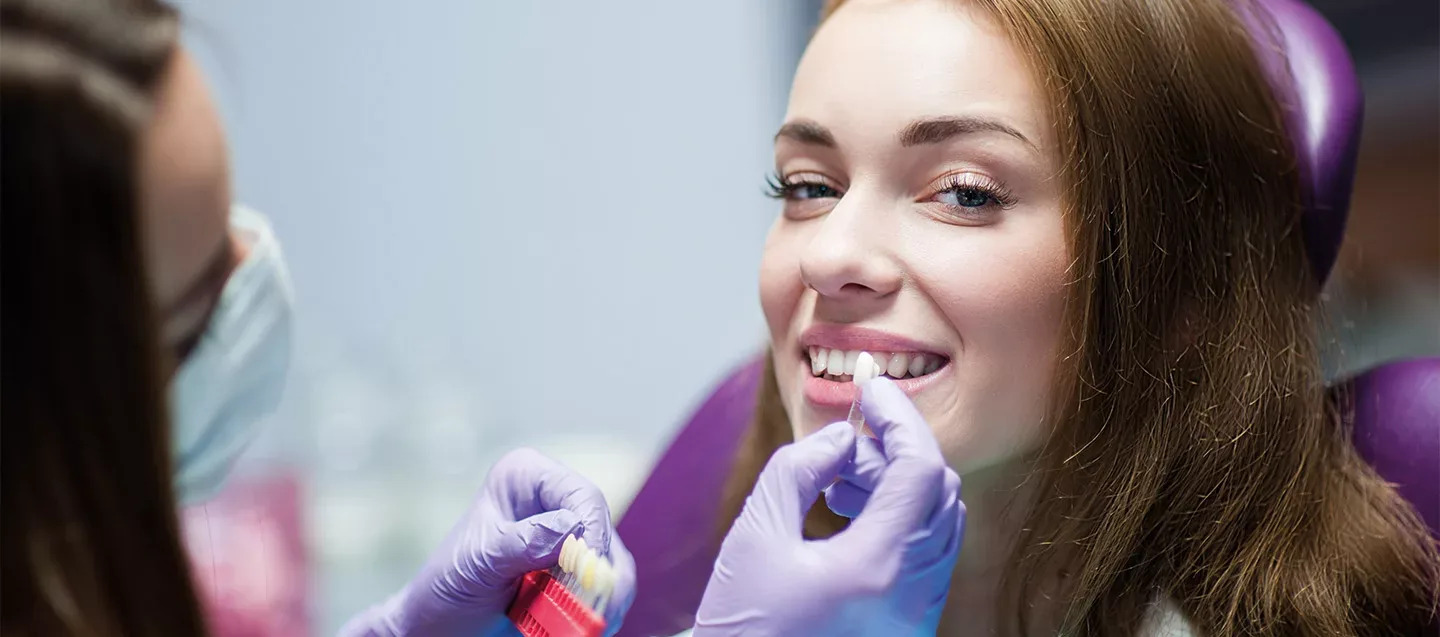
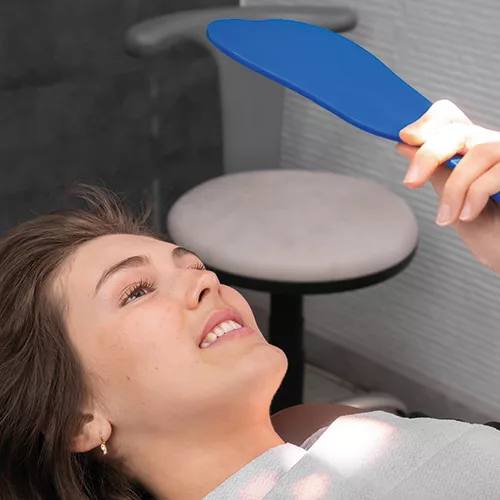
The most critical appointment is not the final one; it is the “Try-In.” Before the veneers are permanently cemented, the dentist places them on your teeth using a water-soluble gel.
This is your moment of truth. In 2026, we encourage patients to bring a trusted friend or partner to this appointment.
- Check the Phonetics: Say “Fifty-Five.” Do your top teeth lightly touch your bottom lip? If they are too long, you will trip over the “F” sound.
- Check the “Cant”: Is the line of the teeth parallel to your eyes?
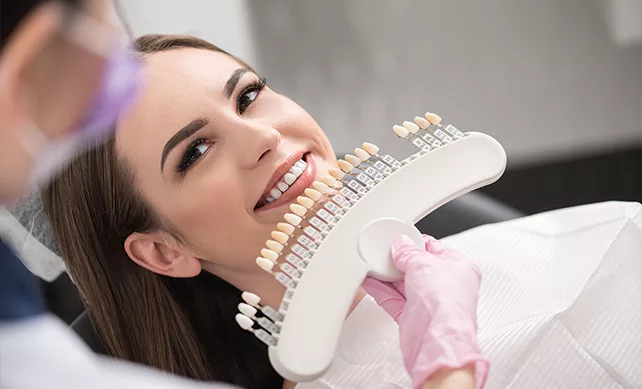
- Check the Color: Walk to a window. Look at them in daylight, not just the dental chair light.
If you don’t love them, we don’t bond with them. We send them back to the lab for adjustments. Once they are bonded, they are yours forever. The “Try-In” is the safety net that ensures satisfaction.
Life with Veneers: The Maintenance Manual
Are veneers high maintenance? Yes and no.
They are stain-resistant. You can drink coffee and red wine, and the glass surface will simply wipe clean (unlike natural enamel which is porous). However, they are glass. They have high compressive strength but low “shear” strength.
- The “Leverage” Rule: You can bite into things (like an apple), but you should not tear things (like a baguette or a package). Never use your teeth as tools.
- The Night Guard: If you have invested in a porcelain smile, a custom night guard is your insurance policy. Most damage happens while we sleep, grinding our teeth due to stress. A simple piece of plastic protects the ceramic from chipping.
With proper care, the bond strength of modern adhesives means your veneers should last 15 to 20 years. They don’t decay, but the tooth under them can. Flossing remains non-negotiable.
Frequently Asked Questions (FAQ)
- Can veneers pop off?
In the old days, yes. In 2026, rare. We use “Resin Cements” that create a chemical bond between the glass and the enamel. The veneer essentially fuses to the tooth. If a veneer comes off, it is usually because of trauma (getting hit in the face) or biting something incredibly hard (like an olive pit). If it comes off intact, it can often be re-bonded.
- Does the process hurt?
The preparation stage is done under local anesthesia, so you feel nothing. The recovery is mild. Because we stay in the enamel (which has no nerves), there is very little post-op pain. You might feel some gum tenderness for a few days where the veneer meets the gum line, but this heals quickly.
- Can I whiten my veneers later?
No. Ceramic does not respond to bleaching gels. If you choose a color (say, BL3), that is the color they will stay forever. This is why we usually recommend whitening your lower natural teeth to your desired shade before we make the upper veneers, so we can match the color perfectly.
- Will I get cavities under the veneers?
The veneer itself seals the front of the tooth, but the back and the gum line are still exposed. If you don’t brush and floss, plaque can accumulate at the margin (where the veneer meets the tooth), leading to decay underneath. Good hygiene is essential to prevent this.
- Why are some veneers “bulky” or “horse-like”?
This happens when the dentist does not prepare (reduce) the natural tooth enough, or the technician makes the porcelain too thick. It is a sign of poor planning. In 2026, with Digital Smile Design and minimal-prep techniques, we ensure the new profile of the tooth is identical to a natural tooth, avoiding that protruding look.
The Art of Invisible Dentistry
True aesthetic mastery is when art conceals art. A successful veneer case is one where people comment on your beauty, your energy, or your happiness, but never your dentistry. It is about restoring the harmony of the face with precision and restraint. In the sophisticated world of 2026, you don’t need to settle for a smile that looks “done.” You can achieve a transformation that looks as if you were simply blessed with perfect genetics. At Turkeyana, our master ceramists and cosmetic dentists are dedicated to this philosophy of hyper-realism, crafting smiles that are not just perfect, but perfectly natural.
Talk to a Turkeyana consultant
Free evaluation and an all-inclusive quote within 24 hours.
Your feedback helps us improve.
Thank you for your feedback.