Table of Contents

A Comparative Guide for the Modern Man | Turkeyana Clinic
In every industry, there is a tipping point where a premium technology becomes the new standard, rendering the old ways obsolete. We saw it when high-definition screens replaced standard definition, and when electric vehicles began to outpace internal combustion engines. In the world of medical aesthetics, 2026 marks that definitive tipping point for hair restoration. The debate is no longer about if you should restore your hair, but how.
For years, the gold standard was the traditional FUE (Follicular Unit Extraction) method using steel blades. It was effective, reliable, and revolutionized the industry by eliminating the strip-scars of the 90s. However, the pursuit of perfection never sleeps. Enter Sapphire FUE. This is not merely a marketing buzzword; it is a fundamental upgrade in the metallurgy and mechanics of surgery. For the modern man considering a hair transplant this year, understanding the difference between a steel blade and a sapphire gemstone is crucial. It is the difference between a “good” result and a “flawless” one.
Why Gemstones Beat Steel
To understand the upgrade, we must look at the tool itself. In a standard FUE procedure, the surgeon opens thousands of tiny channels (incisions) in the recipient area where the hair will be planted. Traditionally, this was done using surgical-grade stainless steel blades. While sharp, steel has limitations. At a microscopic level, steel is imperfect. It can dull over the course of thousands of incisions, and it creates a “U” shaped cut that can cause significant tissue vibration and trauma.
Sapphire FUE replaces the metal blade with a blade crafted from a single crystal of sapphire. Sapphire is one of the hardest substances on earth, second only to diamond. In 2026, these blades are manufactured with laser precision. The advantage is sharpness and smoothness. A sapphire blade does not lose its edge. It creates a “V” shaped incision that is incredibly precise. Because the surface of the crystal is perfectly smooth (unlike the microscopic jaggedness of steel), it glides into the skin without dragging or tearing the tissue. This might sound like a minor detail, but when you multiply that “micro-tear” by 4,000 grafts, the cumulative difference in trauma to the scalp is massive.
Talk to a Turkeyana consultant
Free evaluation and an all-inclusive quote within 24 hours.
The Density Game: The “Piano Key” Effect
The number one fear of any hair transplant patient is a thin, see-through result. You want density. You want to be able to stand under a harsh elevator light without the scalp showing through. Density is purely a math game: How many hair follicles can we pack into a square centimeter?
This is where Sapphire FUE exerts its dominance. Because steel blades are thicker and cause more tissue vibration, there is a limit to how close together the incisions can be made. If they are too close, the skin between them might collapse or lose blood supply.
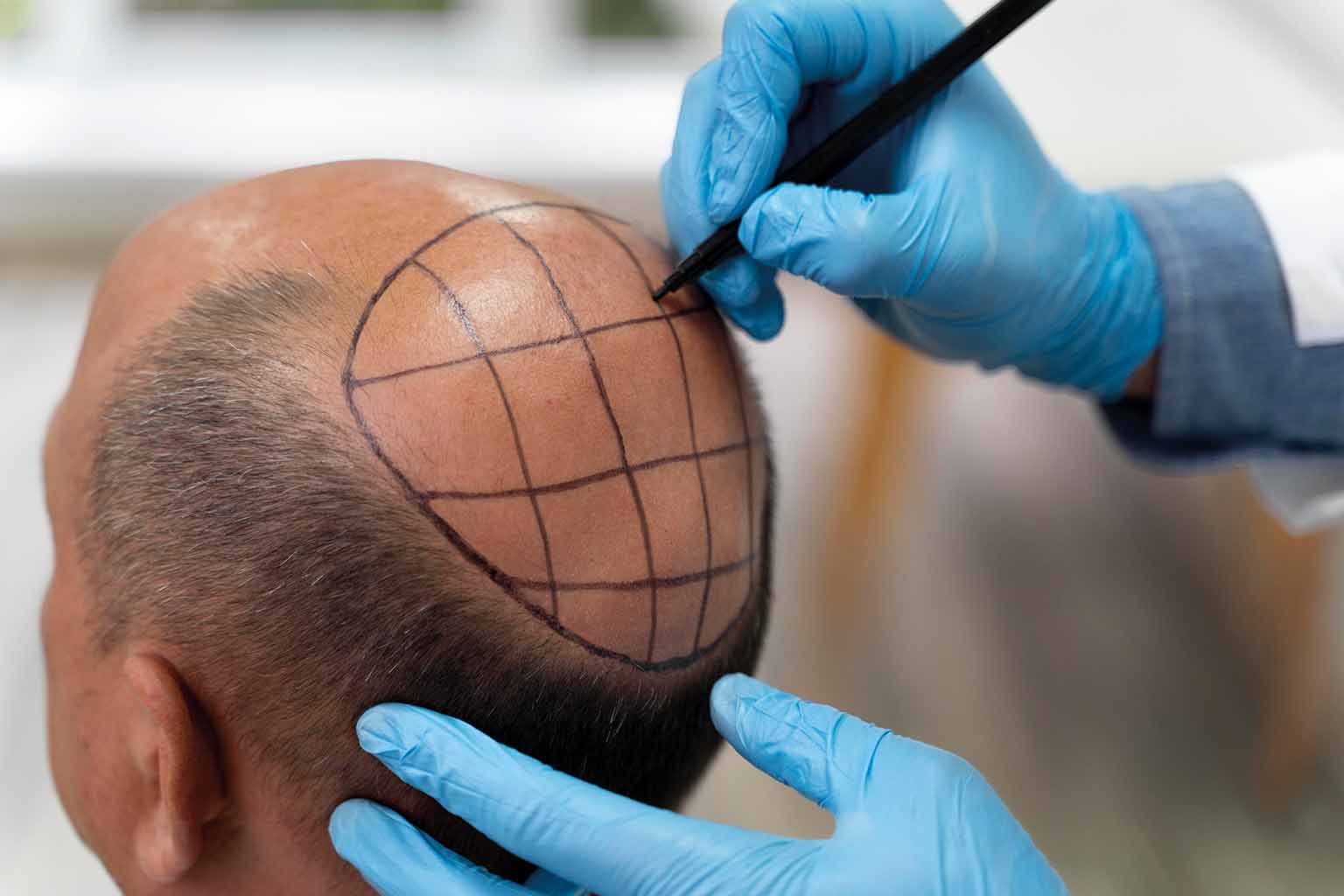
Sapphire blades are thinner and sharper. They allow the surgeon to open “micro-channels” that are significantly smaller than those made by steel. This precision allows for “High-Density Packing.” Surgeons can place the channels closer together like the keys on a piano without compromising the skin’s structural integrity. In 2026, this capability is what allows us to achieve densities of 60 to 80 grafts per square centimeter, approaching the natural density of an untouched scalp. With Sapphire FUE, the “pluggy” look is technically impossible; the result is a seamless wall of hair.

The Recovery Timeline
We live in a fast-paced world. The modern professional cannot afford to hide away for a month waiting to heal. The concept of “Social Downtime” the time it takes before you look presentable in public is a key decision factor.
Because traditional steel blades cause more tissue damage, the body responds with significant inflammation. This leads to more swelling (edema), more scabbing, and a longer healing process. A patient treated with steel blades might face 10 to 14 days of visible scabbing.
Sapphire FUE changes the biological response. Because the incision is so clean and the channel is so small, the body’s “trauma response” is muted. Clotting happens almost instantly. This means less bleeding during the surgery and, crucially, much faster healing after. The scabs formed over sapphire incisions are tiny, often resembling sand grains rather than large crusts. These micro-scabs typically fall off within 7 to 8 days. Furthermore, the risk of post-op swelling dropping down to the eyes is significantly reduced. For the man who needs to be back on a video call or in a meeting within a week, Sapphire is the only logical choice.
Controlling the Cowlick
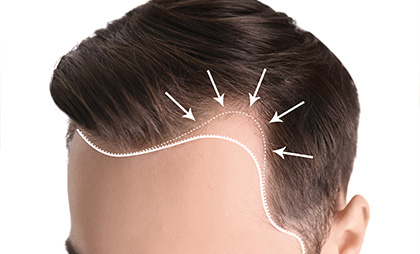
Hair doesn’t just grow out of the head; it has a flow. It spirals at the crown (the vertex), it sweeps back at the temples, and it grows forward at the hairline. Replicating these natural angles is what separates a master surgeon from a technician.
The rigidity and sharpness of the sapphire blade give the surgeon enhanced maneuverability. When using a steel blade, the resistance of the skin can sometimes force a slight deviation in the angle of the incision. The sapphire blade, however, meets almost no resistance. This allows the surgeon to dictate the exact angle and depth of every single hair. This is particularly critical when recreating the “whirl” of the crown area, which is notoriously difficult to make look natural. In 2026, AI-assisted mapping combined with Sapphire precision ensures that every hair is planted at the exact angle required to mimic nature, so even your barber won’t be able to tell which hairs are native and which are transplanted.
The Risk of “Necrosis” and Safety
Safety is paramount. One of the rare complications in hair transplantation is skin necrosis (tissue death), which occurs when the blood supply to the scalp is compromised due to excessive trauma or dense packing with large blades.
Sapphire blades are antimicrobial and hypoallergenic. They do not react with the body or the immune system. More importantly, because they minimize vascular damage, they preserve the blood circulation in the scalp even during dense packing sessions. In the advanced medical landscape of 2026, where patient safety protocols are more stringent than ever, Sapphire FUE is recognized as the safer methodology, minimizing risks of infection and ensuring the highest survival rate for the transplanted grafts.
The Cost-Benefit Analysis
It is true that Sapphire FUE typically carries a slightly higher price tag than traditional steel-blade FUE. The blades themselves are expensive, single-use medical devices. However, when viewed as a lifetime investment, the math favors Sapphire.
Consider the “cost” of a suboptimal result: thinner density, visible scarring, or a hairline that looks artificial. The cost to repair these issues is far higher than the initial difference in price. Moreover, the value of a faster recovery getting back to work and life sooner has a tangible economic benefit. In 2026, the discerning man views hair restoration not as a cost, but as an asset acquisition. You are acquiring a permanent feature of your appearance. Investing in the superior tool for the job ensures that the asset appreciates in value (confidence) rather than depreciating (regret).
Frequently Asked Questions (FAQ)
- Is Sapphire FUE painful?
No more than traditional FUE, and often less post-operatively. The procedure is performed under local anesthesia, so you feel nothing during the surgery. Because Sapphire causes less tissue trauma, patients often report less throbbing or soreness in the donor and recipient areas in the days following the operation compared to steel-blade methods.
- Can Sapphire FUE be used for all hair types?
Yes. Sapphire FUE is excellent for all hair types, including curly or wavy hair. In fact, it is often preferred for Afro-textured hair compared to traditional blades because the precision prevents damage to the curved root of the follicle during the implantation phase, though extraction requires specific expertise.
- Does Sapphire FUE leave scars?
All surgical procedures leave some mark, but Sapphire FUE leaves the minimal possible footprint. The micro-channels are so small that once they heal, they are invisible to the naked eye. There is no linear scarring (like in the old strip method), and the “dot” scarring is virtually undetectable even with short haircuts.
- How many grafts can be transplanted in one session with Sapphire FUE?
Because the blades allow for closer packing without damaging the skin, surgeons can often transplant a higher number of grafts safely in a single session, often up to 4,500 or 5,000 grafts, depending on the donor area’s capacity. This makes it ideal for men with advanced hair loss (Norwood Scale 4-6).
- Is there a difference in the “Shock Loss” phase?
“Shock loss” (the temporary shedding of transplanted hair) is a normal part of the cycle. However, because Sapphire FUE preserves the scalp health better, the shock loss phase can sometimes be shorter, and the native hair surrounding the transplant is less likely to be affected by the trauma of the surgery.
Precision as a Standard, Not an Option
In the end, the choice of technology reflects your standards. If you demand the best in your career, your technology, and your lifestyle, your medical choices should be no different. The Sapphire blade represents the pinnacle of 2026 hair restoration technology, a marriage of nature’s hardest material and human surgical artistry. It offers the density you desire with the recovery speed you need. At Turkeyana, we have transitioned to making Sapphire FUE our standard of care for eligible patients, because we believe that when it comes to your confidence, “good enough” is simply not enough.
Your feedback helps us improve.
Thank you for your feedback.