Table of Contents

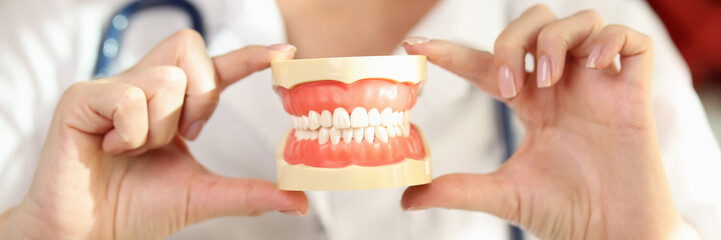
In the contemporary landscape of dental medicine, the overwhelming majority of clinical attention is often directed toward the eradication of bacterial infections, such as caries and periodontitis, or the aesthetic enhancement of the anterior teeth. However, a profoundly critical, yet frequently overlooked, dimension of oral health lies in the biomechanical harmony of the entire masticatory system. This highly specialized field of study is known as gnathology. Gnathology goes far beyond the static appearance of a smile; it is the exact science of the anatomy, histology, physiology, and pathology of the jaws and their associated structures. When the intricate relationship between the teeth, the facial musculature, and the temporomandibular joints (TMJ) is disrupted, it inevitably leads to a cascade of degenerative issues collectively classified as Temporomandibular Disorders (TMD). Addressing these disorders through precise occlusal (bite) correction is not merely a restorative luxury, but an absolute medical necessity for ensuring long-term structural and systemic health.
The Biomechanical Complexity of the Temporomandibular Joint
To comprehend the devastating impact of gnathological dysfunction, one must first examine the unparalleled anatomical complexity of the temporomandibular joint. Unlike a simple hinge joint, such as the knee or elbow, the TMJ is classified as a ginglymoarthrodial joint. This means it relies on two distinct physiological movements to function: a rotational (hinge) movement to initially open the mouth, and a translational (sliding) movement that allows the lower jaw to glide forward and side-to-side for the complex grinding of food.
At the core of this complex articulation is the articular disc—a dense, fibrous pad of cartilage situated between the mandibular condyle (the ball of the lower jaw) and the articular eminence of the temporal bone (the socket in the skull). In a state of perfect gnathological health, this disc acts as a crucial shock absorber, moving seamlessly with the condyle to prevent bone-on-bone friction. Furthermore, the entire joint is stabilized by a highly sophisticated network of ligaments and powered by the powerful muscles of mastication, primarily the masseter, temporalis, and lateral pterygoid muscles. The structural integrity of this entire system is entirely dependent on the precise, balanced meeting of the upper and lower teeth—a concept known as occlusion.
Talk to a Turkeyana consultant
Free evaluation and an all-inclusive quote within 24 hours.
The Pathogenesis of Temporomandibular Disorders (TMD)
Temporomandibular Disorders rarely arise from a single, isolated traumatic event; rather, they are typically the culmination of chronic, microscopic biomechanical failures. The primary etiological factor in most TMD cases is a fundamental discrepancy between Maximum Intercuspation (MI)—the position where the teeth fit together the tightest—and Centric Relation (CR)—the most anatomically relaxed, neurologically neutral position of the jaw joints in their sockets.
When the teeth do not interlock perfectly while the joints are in their resting position, the body is forced to make a subconscious neurological adaptation. The masticatory muscles must constantly contract to pull the jaw out of its natural socket position just to allow the teeth to bite together fully. This continuous, forced hyperactivity throws the facial musculature into a state of chronic spasm. Over time, this intense, unbalanced muscular force applies massive asymmetrical pressure to the TMJ. The articular disc can become compressed, thinned, and eventually displaced forward (anterior disc displacement). When the condyle snaps on and off this displaced disc during movement, it produces the sharp clicking or popping sounds classically associated with TMD. If the disc becomes permanently displaced, the patient may experience “closed lock,” a terrifying clinical scenario where the mouth cannot be fully opened.
Systemic Manifestations and Referred Pain
The clinical consequences of a misaligned bite extend far beyond localized jaw pain or auditory clicking. Because the trigeminal nerve—the largest and most complex of the cranial nerves—innervates both the teeth and the temporomandibular joints, the pain signals generated by TMD are frequently referred to other areas of the head and neck.
Patients suffering from severe gnathological imbalances routinely present to neurologists and general practitioners with debilitating chronic tension headaches, intense migraines, and radiating pain behind the eyes. Furthermore, the hyperactivity of the jaw muscles strains the interconnected musculature of the cervical spine, leading to chronic neck and shoulder stiffness. In many cases, the anatomical proximity of the TMJ to the auditory canal results in otologic symptoms, including unexplained earaches, a feeling of fullness in the ears, and severe tinnitus (ringing in the ears), often leading to years of misdiagnosis before the dental etiology is finally identified.
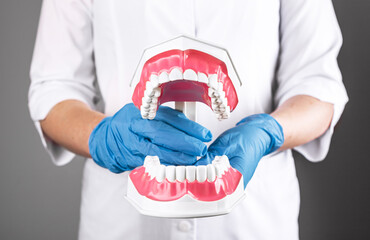
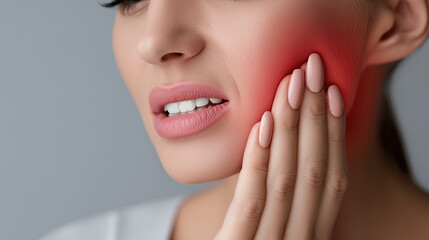
Advanced Gnathological Diagnostics and Interventions
Diagnosing and resolving these complex biomechanical disorders requires transitioning away from traditional, visually based dentistry and embracing a deeply objective, data-driven gnathological approach. Elite clinicians do not simply “guess” at a patient’s bite. The diagnostic phase involves capturing the precise, three-dimensional trajectory of the patient’s jaw movements.
Advanced diagnostic protocols utilize computerized occlusal analysis (such as the T-Scan system), which records the exact micro-timing and relative force of every single tooth contact in real-time. This is often paired with electromyography (EMG) to measure the electrical activity and resting tension of the masticatory muscles, alongside high-resolution Cone Beam Computed Tomography (CBCT) to visualize the precise bony architecture of the joints.
Once the precise gnathological discrepancy is mapped, therapeutic intervention typically follows a phased approach. Phase I involves reversible therapy, utilizing custom-fabricated orthotic appliances (occlusal splints). Worn over the teeth, these precisely calibrated hard acrylic devices temporarily eliminate the pathological tooth contacts, essentially “deprogramming” the muscle memory and allowing the TMJ to naturally settle back into its relaxed, physiological Centric Relation. Once the joints are stable, the muscles are relaxed, and the pain has subsided, the clinician moves to Phase II: the irreversible correction of the bite to match this new, healthy joint position. Depending on the severity of the misalignment, this can be achieved through occlusal equilibration (microscopic, selective reshaping of the tooth enamel), orthodontic tooth movement, or a comprehensive full mouth rehabilitation utilizing biomimetic ceramic restorations to permanently rebuild the Vertical Dimension of Occlusion (VDO).
Mastering the intricate biomechanics of the human skull requires an institution that views dentistry not merely as tooth repair, but as highly sophisticated orthopedic medicine. Turkeyana excels in this elite medical frontier, providing international patients with comprehensive gnathological evaluations that identify the true root cause of chronic orofacial pain. By utilizing the world’s most advanced digital jaw tracking systems, computerized occlusal analysis, and high-definition 3D tomography, the highly specialized board of prosthodontists and maxillofacial experts at Turkeyana eliminate clinical guesswork. Whether engineering a specialized neuromuscular orthotic to resolve acute joint inflammation or executing a flawless, full-arch ceramic rehabilitation to permanently stabilize the bite, the clinic ensures that every restorative intervention is in perfect harmony with the patient’s underlying joint physiology. For individuals suffering from the debilitating systemic effects of TMJ disorders, Turkeyana offers a scientifically rigorous, world-class pathway to profound pain relief, ensuring that the foundational architecture of their smile is engineered to last a lifetime.
Your feedback helps us improve.
Thank you for your feedback.