Table of Contents
- Why Candidate Selection Matters in Hair Transplant Surgery
- What Makes Someone a Good Hair Transplant Candidate?
- Age and Hair Transplant Eligibility
- Hair Transplant for Men vs. Women
- Scalp Condition and Skin Health
- Overall Health and Medical Conditions
- Lifestyle Factors That Affect Candidacy
- Realistic Expectations: A Key Qualification
- Who Is NOT a Good Candidate for Hair Transplant?
- Alternative Treatments for Non-Candidates
- Can Hair Transplant Candidacy Change Over Time?
- How a Professional Consultation Determines Eligibility
- Importance of Long-Term Hair Restoration Planning
- Common Mistakes in Candidate Selection
- Why Choosing the Right Clinic Matters
- Are You the Right Candidate?



Hair transplant surgery has become one of the most effective and permanent solutions for hair loss. However, despite its high success rate, not everyone is an ideal candidate for the procedure. Understanding whether you are a good candidate for a hair transplant is essential for achieving natural, long-lasting, and satisfying results.
In this comprehensive guide, we explain who qualifies for hair transplant surgery, which factors determine suitability, and when alternative treatments may be more appropriate.


Why Candidate Selection Matters in Hair Transplant Surgery
The success of a hair transplant does not depend solely on the technique or clinic it heavily depends on choosing the right candidates. Proper candidate selection ensures:
- High graft survival rates
- Natural-looking density
- Long-term satisfaction
- Reduced risk of complications
- Realistic expectations
A professional evaluation is the foundation of a successful hair restoration journey.
Talk to a Turkeyana consultant
Free evaluation and an all-inclusive quote within 24 hours.
What Makes Someone a Good Hair Transplant Candidate?
Several medical, genetic, and lifestyle factors are evaluated to determine candidacy.
1. Stable Hair Loss Pattern
The best candidates typically have stabilized hair loss, meaning:
- Hair loss progression has slowed
- The pattern of baldness is predictable
- Future hair loss can be anticipated
Patients with rapidly progressing hair loss may need medical treatment first before considering surgery.
2. Sufficient Donor Hair
The donor area usually the back and sides of the scalp must have enough healthy hair follicles.
Good donor characteristics include:
- High density
- Strong follicle structure
- Resistance to genetic hair loss
Without sufficient donor hair, achieving adequate coverage becomes difficult.
3. Type of Hair Loss
Hair transplants work best for specific hair loss types, such as:
- Androgenetic alopecia (male or female pattern baldness)
- Receding hairline
- Crown thinning
- Localized bald patches
- Hair loss due to trauma or scarring
Diffuse or medical-condition-related hair loss may require alternative treatments.
Age and Hair Transplant Eligibility
Is There a Minimum Age for Hair Transplant?
While there is no strict age limit, most specialists recommend waiting until at least 22–25 years old. Younger patients may experience unpredictable hair loss progression, which can compromise long-term results.
Is There an Upper Age Limit?
There is no upper age limit as long as the patient:
- Is in good overall health
- Has sufficient donor hair
- Has realistic expectations
Many patients in their 50s and 60s successfully undergo hair transplant surgery.
Hair Transplant for Men vs. Women
Male Candidates
Men with male pattern baldness are often ideal candidates due to:
- Predictable hair loss patterns
- Strong donor areas
- Well-established surgical techniques
Female Candidates
Women can also be good candidates if they have:
- Localized thinning
- Stable hair loss
- Healthy donor areas
Diffuse thinning across the entire scalp may limit eligibility, but many women still benefit from tailored procedures.
Scalp Condition and Skin Health
A healthy scalp is essential for graft survival. Ideal candidates have:
- No active scalp infections
- No severe dermatitis or psoriasis
- Good blood circulation
Underlying scalp conditions must be treated before surgery.
Overall Health and Medical Conditions
Good candidates are generally in good health. Certain conditions may require extra evaluation, including:
- Diabetes
- Autoimmune diseases
- Blood clotting disorders
- Heart conditions
These conditions do not always disqualify patients, but they require medical clearance.
Lifestyle Factors That Affect Candidacy
Smoking and Alcohol Use
Smoking reduces blood circulation and can negatively affect healing and graft survival. Patients are usually advised to stop smoking before and after surgery.
Stress and Nutrition
Chronic stress and poor nutrition can contribute to hair loss and affect recovery. A healthy lifestyle improves outcomes significantly.
Realistic Expectations: A Key Qualification
One of the most overlooked aspects of candidacy is expectation management.
Good candidates understand that:
- A hair transplant improves density, not perfection
- Results take up to 12 months
- Natural-looking coverage is the goal
Unrealistic expectations often lead to dissatisfaction, even with technically successful procedures.
Who Is NOT a Good Candidate for Hair Transplant?
You may not be an ideal candidate if you:
- Have insufficient donor hair
- Experience active, diffuse hair shedding
- Have untreated medical scalp conditions
- Expect instant or extreme density
- Have unrealistic cosmetic goals
In such cases, non-surgical treatments may be recommended.
Alternative Treatments for Non-Candidates
For patients who are not suitable for surgery, alternatives include:
- PRP therapy
- Minoxidil
- Finasteride
- Low-level laser therapy
- Hair systems or cosmetic solutions
These options can slow hair loss or improve appearance.
Can Hair Transplant Candidacy Change Over Time?
Yes. A person who is not a candidate today may become one later. Hair loss stabilization, improved health, or medical treatment can make surgery possible in the future.
This is why long-term planning is important.
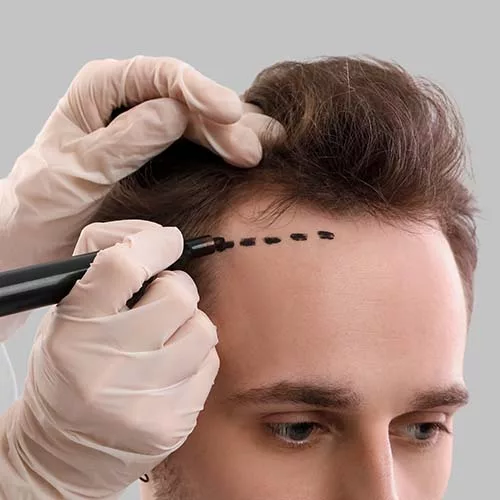
How a Professional Consultation Determines Eligibility
During a consultation, specialists evaluate:
- Hair loss pattern
- Donor area density
- Scalp condition
- Medical history
- Expectations
Advanced clinics use digital hair analysis and long-term planning tools to ensure accurate assessments.
Importance of Long-Term Hair Restoration Planning
Good candidates benefit from clinics that plan for the future by:
- Preserving donor hair
- Designing age-appropriate hairlines
- Anticipating future hair loss
This approach ensures natural results for years to come.
Common Mistakes in Candidate Selection
Mistakes often occur when:
- Clinics prioritize volume over quality
- Patients choose clinics based only on price
- Proper consultations are skipped
These mistakes can lead to poor outcomes or the need for corrective surgery.
Why Choosing the Right Clinic Matters
Even good candidates can get poor results if the clinic lacks:
- Experienced surgeons
- Proper planning
- Ethical practices
Clinic selection is just as important as candidacy itself.
Are You the Right Candidate?
Being a good candidate for hair transplant surgery depends on a combination of medical suitability, donor hair quality, and realistic expectations. When these elements align, hair transplant surgery can be a life-changing and permanent solution.
Clinics like Turkeyana emphasize thorough candidate evaluation, personalized treatment planning, and ethical medical standards. By focusing on long-term success rather than short-term results, Turkeyana helps ensure that only suitable candidates undergo hair transplant surgery leading to natural, reliable, and satisfying outcomes.
Your feedback helps us improve.
Thank you for your feedback.