Table of Contents
- Beard Transplants: The Secret to Achieving the Perfect Stubble
- The Architecture of the Face
- The “Patchiness” Epidemic and the limit of Minoxidil
- The Technology: Why DHI is the Gold Standard for Beards
- Designing the “2026 Stubble”
- What to Expect on the Chair
- The “Grey” Advantage and Aging
- Hygiene and Maintenance in a Post-Pandemic World
- Frequently Asked Questions (FAQ)
- Sculpting Your Signature

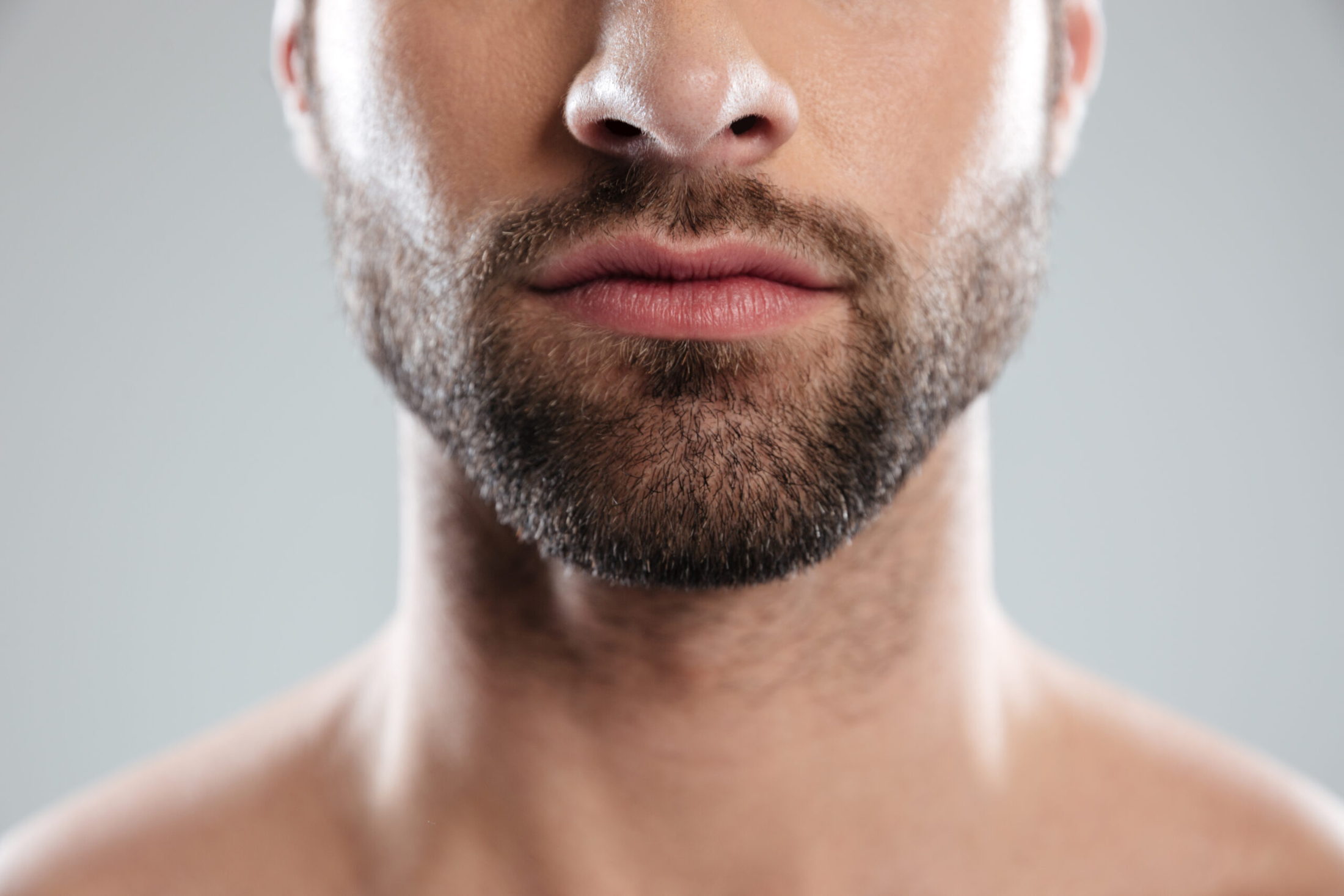
Beard Transplants: The Secret to Achieving the Perfect Stubble

For decades, the conversation around male grooming was binary: you were either clean-shaven or you were “letting it grow.” But as we navigate the aesthetic landscape of 2026, the beard has transcended its status as mere facial hair. It has become the male equivalent of contouring a permanent, biological accessory that defines the jawline, projects maturity, and balances facial proportions. In the era of high-definition personal branding, a patchy beard is no longer just a genetic quirk; it is an architectural flaw in the facial framework that men are increasingly choosing to fix.
The rise of the Beard Transplant is one of the most significant trends in medical aesthetics this year. It is not just for the smooth-cheeked man wanting a full lumberjack look; it is increasingly for the man who has hair but lacks density or geometry. It is for the executive who wants the “Designer Stubble” to look intentional rather than messy. It is for the man who wants to hide acne scars or create a stronger chin without bone surgery. In 2026, we are engineering masculinity with precision, one follicle at a time.
The Architecture of the Face
To understand the demand for beard transplants, we must look at facial geometry. A strong, defined jawline has universally been associated with masculinity, strength, and fitness. However, not everyone is born with the bone structure of a Hollywood leading man. This is where the beard acts as a “soft implant.”
A strategically designed beard creates an optical illusion. By adding density to the lower third of the face, a transplant can visually widen a narrow chin, square off a round face, or hide a “weak” jawline. In 2026, surgeons are not just filling in gaps; they are acting as facial sculptors. They use the “Golden Ratio” to determine exactly where the cheek line should sit to highlight the cheekbones and where the neckline should end to reduce the appearance of a double chin. For many patients, a beard transplant offers a more natural and less invasive alternative to chin implants or jaw fillers, with results that last a lifetime rather than six months.
Talk to a Turkeyana consultant
Free evaluation and an all-inclusive quote within 24 hours.
The “Patchiness” Epidemic and the limit of Minoxidil
We live in a time of instant gratification, but biology is slow. Many men spend their twenties and thirties waiting for their beards to “connect.” They struggle with patchiness on the cheeks or a mustache that refuses to join the chin beard (the “goatee gap”).
While topical solutions like Minoxidil have been the first line of defense, they have limitations. They can stimulate existing thin hairs to become thicker, but they cannot create hair follicles where none exist. If you have a bald patch due to genetics or scarring (alopecia barbae or injury), no amount of oil or serum will make hair grow there. This is the “biological ceiling.” A transplant breaks through this ceiling. It physically moves healthy, genetically permanent hair follicles from the donor area (the back of the scalp) to the face. It is the only way to achieve true, high-density coverage that is immune to the whims of hormones or creams.

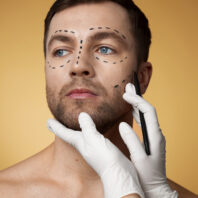
The Technology: Why DHI is the Gold Standard for Beards
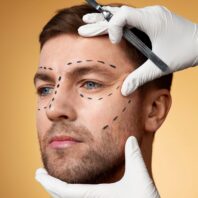
When it comes to the face, the margin for error is zero. The skin on the face is different from the scalp; it is more vascular, more elastic, and much more visible. This is why Direct Hair Implantation (DHI) has become the absolute requirement for top-tier beard transplants in 2026.
Unlike the scalp, where hair often grows in groups of 2 or 3, facial hair usually grows as single units and at very acute angles. On the cheeks, hair might grow downwards and slightly back. On the neck, it might swirl. If a surgeon uses standard forceps to place the hair (as in traditional FUE), it is difficult to control this angle perfectly. The result can be a “porcupine” effect where the hair sticks straight out, looking unnatural.
With DHI using the Choi Implanter Pen, the surgeon has total control over the angle, depth, and direction. They can implant the follicle almost parallel to the skin, mimicking the natural “lie” of facial hair. Furthermore, the Choi pen allows for extreme density. The goal in 2026 is the “Shadow Effect” creating enough density so that even when the beard is trimmed short (stubble length), the skin coverage is uniform. This precision prevents the “doll hair” look and ensures that the transition from the cheek to the beard is a soft, natural gradient.
Designing the “2026 Stubble”
The trend for 2026 has shifted away from the massive, bushy “hipster” beards of the 2010s toward a more refined, corporate-friendly aesthetic: The Heavy Stubble (often called the “10-day shadow”). This look is versatile, hygienic, and sharp. However, it is also the most unforgiving style.
With a long beard, you can comb hair over patches. With stubble, the skin is visible. Every gap is exposed. Therefore, modern beard transplants focus heavily on Cheek Line Definition. The line shouldn’t be a sharp, ruler-straight edge (which looks artificial); it needs to be “macro-regular but micro-irregular.” Surgeons plant single, finer hairs at the very top of the cheek line to create a soft transition, gradually increasing to thicker, multi-hair grafts as they move down toward the jaw. This gradient density is what separates a world-class transplant from a mediocre one. It allows the man to shave his beard down to 3mm or 5mm and still look impeccable.
What to Expect on the Chair
A beard transplant is a meticulous process, typically taking 4 to 6 hours. It is performed under local anesthesia, so the patient is awake and comfortable, often listening to podcasts or watching movies.
- Extraction: Hair is harvested from the “safe zone” at the back of the head. For beards, surgeons select the finest hairs to match the texture of facial hair.
- Preparation: The grafts are cleaned and sorted by thickness.
- Implantation: The surgeon implants the hairs one by one into the designated facial zones.
The recovery, however, requires discipline. The face is mobile. We talk, we chew, we smile. For the first 3 to 4 days post-op, movement must be minimized to ensure the grafts anchor securely. Patients are advised to eat soft foods (soups, smoothies) to avoid excessive jaw movement. The “Ugly Duckling” phase on the face is visible; there will be redness and scabbing for about a week. However, because facial blood supply is so rich, healing is often faster than on the scalp. By day 10, the scabs fall off, and the redness fades to a light pink that can be easily concealed.
The “Grey” Advantage and Aging
An interesting aspect of beard transplants is how they age. As men get older, the hair on the back of the head (the donor) may go grey, as will the beard. The transplanted hair will follow this natural genetic clock.
In 2026, the “Salt and Pepper” beard is a highly coveted asset. It projects experience and authority. Many older men (40s and 50s) undergo beard restoration specifically to achieve this look. They have the grey, but they lack the density. By transplanting hair, they create a full, silver-streaked beard that acts as a natural facelift, hiding sagging skin around the jowls and neck. It is a powerful anti-aging tool that adds ruggedness rather than trying to cling to youth.
Hygiene and Maintenance in a Post-Pandemic World
Hygiene remains a priority. One of the myths of beards is that they are “dirty.” In reality, a restored beard in 2026 is part of a high-maintenance grooming ritual. Because transplanted hair comes from the scalp, it can grow longer than natural beard hair. This requires a commitment to grooming.
The modern man with a transplanted beard becomes a master of the trimmer. He uses beard oils to soften the scalp-derived hairs (which can be slightly coarser initially) and brushes to train the direction. This ritual is part of the appeal. It connects the man to his appearance daily. It transforms the morning routine from a chore into a craft.
Frequently Asked Questions (FAQ)
- Will the transplanted hair look like head hair or beard hair?
Initially, it retains the characteristics of scalp hair (it grows faster and can be softer). However, over time (typically 12 to 18 months), the transplanted hair begins to adapt slightly to its new location in terms of texture, a process known as “recipient dominance.” With regular trimming and the use of beard oils, it blends seamlessly with any existing facial hair.
- Can I shave my beard after a transplant?
You must not shave for the first 10 to 14 days to allow the grafts to root. After two weeks, you can use scissors to trim. After one month, you can use an electric clipper. We generally recommend waiting at least 3 to 6 months before using a wet razor (clean shave) on the area to ensure the skin has fully healed and the follicles are dormant.
- Does it hurt to eat afterwards?
There is no pain while eating, but there is a risk of dislodging grafts with excessive jaw movement. For the first 3 days, we recommend a liquid or soft diet (yogurt, soup, mashed potatoes). Avoid biting into apples or chewing tough steaks. Straws are your friend during this period.
- How many grafts do I need for a full beard?
It varies wildly based on your starting point.
- Goatee only: 1,000 – 1,500 grafts.
- Full Beard (Cheeks + Chin + Mustache): 2,500 – 3,500 grafts.
- Filling patches: 500 – 1,000 grafts.
During your consultation, the surgeon will calculate the exact number needed to match your desired density.
- Will there be scars on my face?
With the DHI technique using fine sapphire or Choi tips (0.6mm – 0.8mm), there is virtually no scarring on the face. The insertion points heal as tiny, invisible dots. This is crucial because, unlike the scalp, you cannot hide facial scars with long hair if you choose to shave later. DHI ensures you retain the option to be clean-shaven in the future without visible pitting.
Sculpting Your Signature
A beard is the only accessory that you can grow, shape, and wear every day. It is a signature of your style and a modifier of your face shape. Whether you seek the rugged density of a full beard or the sharp, professional lines of designer stubble, the capability to engineer your ideal look is now within reach. It is about closing the gap between the face you have and the face you want to present to the world. At Turkeyana, our specialists are not just medical technicians; they are facial aesthetic architects. We understand the nuance of angles, density, and design, ensuring that your new beard looks as natural as if you were born with it only better.
Your feedback helps us improve.
Thank you for your feedback.