Table of Contents

The Psychology of Hair Loss: Overcoming the Stigma and Taking Action
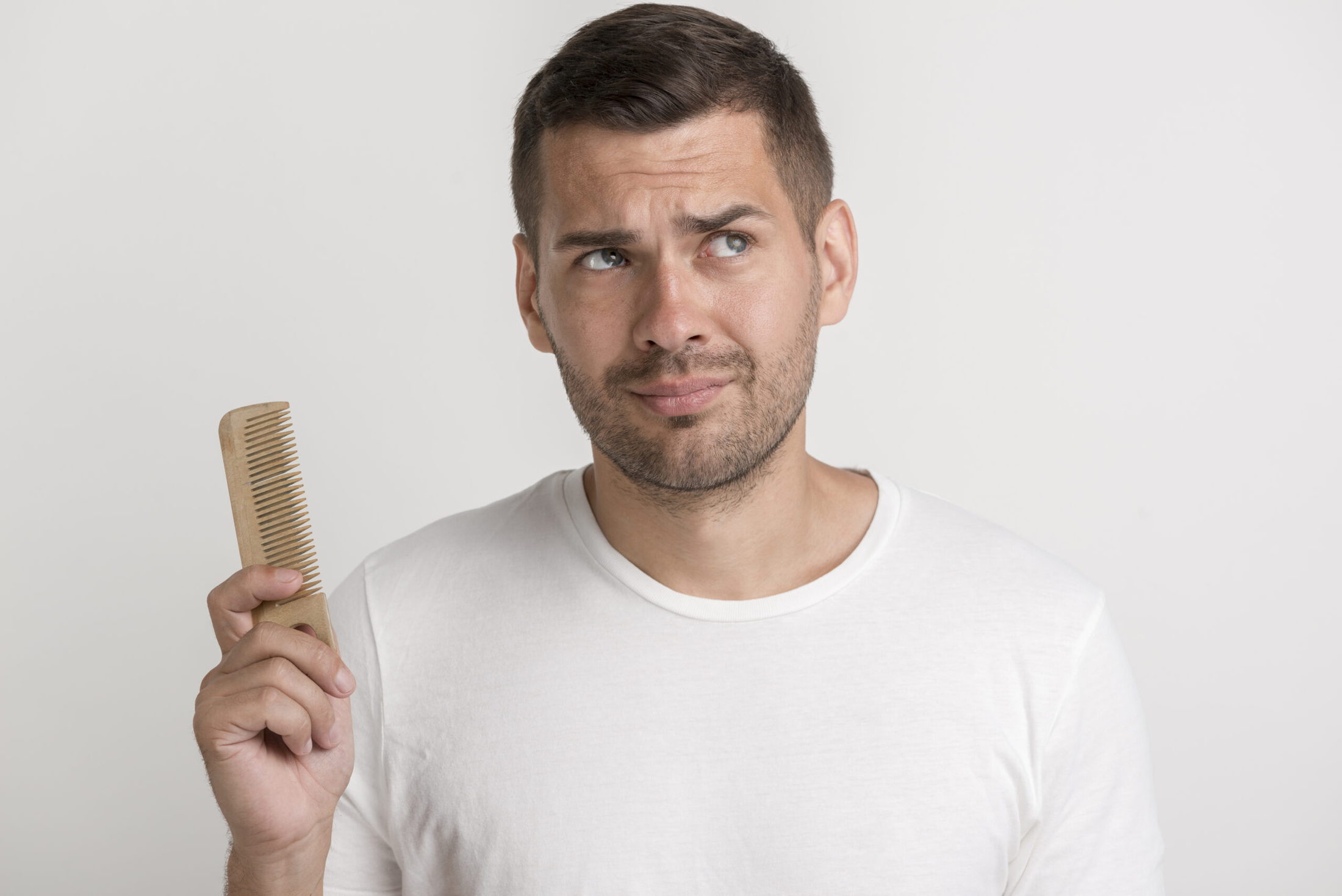
When we talk about health, we often compartmentalize it into the physical and the mental. We treat a broken arm with a cast and anxiety with therapy. However, in the nuanced landscape of 2026, we increasingly recognize the deep interconnection between how we look and how we feel. Few conditions bridge this gap as starkly as hair loss. It is a biological process, yes, but its impact is profoundly psychological.
For many men, hair is more than just keratin fibers; it is a symbol of vitality, youth, and virility. It is a crown of identity. Losing it can feel like a slow-motion loss of self. Despite the body positivity movements of the last decade, the stigma surrounding male pattern baldness and the decision to fix it remains a complex web of silence and shame. As we navigate a year where mental health is prioritized as the ultimate wealth, it is time to have an honest conversation about the psychology of hair loss. It is time to acknowledge that seeking restoration isn’t just about vanity; it is about reclaiming your mental peace and aligning your external avatar with your internal spirit.
Why We Think Everyone is Staring
Psychologists refer to a phenomenon known as the “Spotlight Effect,” where individuals believe they are being noticed and evaluated by others much more than they actually are. For the man experiencing hair loss, this effect is amplified to a deafening volume.
Every interaction becomes a calculation. Is the overhead light too bright? Is the wind exposing my temples? Is the person I’m talking to looking at my eyes or my hairline? This constant, low-level vigilance creates a cognitive load. It drains mental energy that should be used for creativity, work, or connection. In 2026, with the prevalence of high-definition video calls and social media documentation, this anxiety is heightened. The digital mirror is unforgiving. Men often report avoiding social gatherings, not because they don’t want to see friends, but because they don’t want to be “seen” in a way that makes them feel vulnerable. This withdrawal is the first step in a cycle of isolation that can lead to genuine depressive symptoms.
Talk to a Turkeyana consultant
Free evaluation and an all-inclusive quote within 24 hours.
The Norwood Scale of Emotion
We often use the Norwood Scale to classify the physical stages of hair loss, ranging from a receding hairline (Stage 1-2) to full vertex baldness (Stage 7). However, there is a parallel emotional scale.
- Stage 1 (Denial): “It’s just a bad haircut,” or “I’m just stressed.” This is a protective mechanism.
- Stage 2 (Anxiety): The realization hits. The frantic purchasing of thickening shampoos and vitamins. The checking of the mirror ten times a day.
- Stage 3 (Resignation vs. Action): This is the crossroads. One path leads to “accepting defeat” and the potential loss of confidence. The other path leads to proactive management.
In 2026, the timeline between these stages has shortened. Men are taking action earlier. The trend of “preventative aesthetics” means that men are no longer waiting for Stage 5 to intervene. They are addressing the anxiety at Stage 2, understanding that preserving mental well-being is just as important as preserving the follicle itself.
Cognitive Dissonance: The “Old Man” in the Mirror
One of the most jarring psychological aspects of hair loss is the disconnect between chronological age and biological appearance. You might be 32 years old. You feel fit, ambitious, and energetic. You are in the prime of your life. Yet, when you catch your reflection in a shop window, the receding hairline stares back with the visage of a 45-year-old.
This creates “Cognitive Dissonance” mental stress caused by holding two contradictory beliefs (e.g., “I am young” vs. “I look old”). This dissonance attacks self-esteem. It forces a man to grapple with his mortality and aging process prematurely. Hair restoration resolves this conflict. It is not about trying to look 18 again; it is about looking like the best version of your current age. It realigns the reflection with the reality of your energy levels. When the outside matches the inside, the dissonance vanishes, and confidence naturally returns to equilibrium.

The Therapy of Taking Control
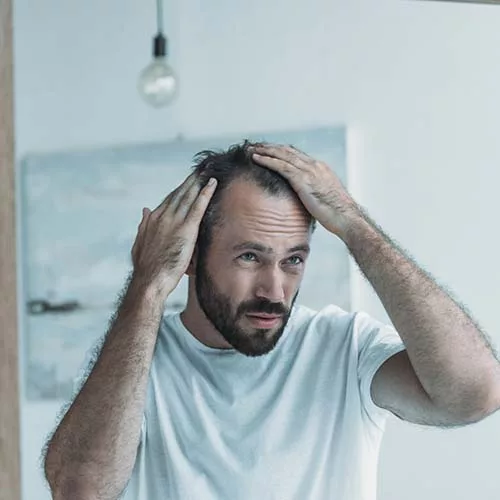
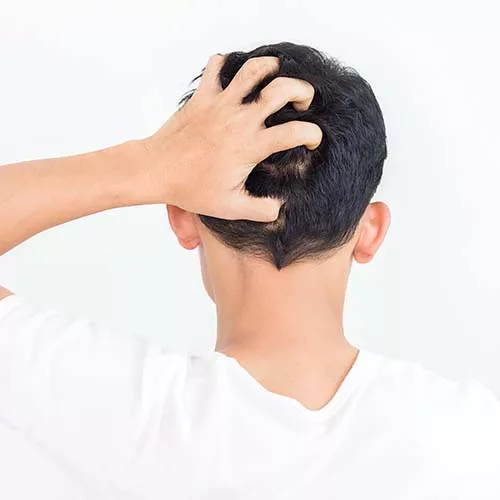
Psychologically, anxiety often stems from a loss of control. Genetic hair loss (Androgenetic Alopecia) feels like a betrayal by your own DNA. It is happening to you, and it feels unstoppable.
The act of booking a consultation, researching techniques like DHI or Sapphire FUE, and finally scheduling the procedure is, in itself, therapeutic. It is an act of reclaiming agency. You are shifting from a passive victim of genetics to an active architect of your appearance. In the mental health focused culture of 2026, this “Action-Oriented Coping” is highly celebrated. We no longer view medical aesthetics as “cheating nature”; we view it as “bio-hacking.” Just as we exercise to control our weight or meditate to control our stress, we restore our hair to control our self-image. The moment the decision is made, a weight is often lifted even before the surgery takes place.
The Ripple Effect on Professional and Social Life
We cannot ignore the sociological data. Studies consistently show that individuals with higher self-confidence perform better in interviews, are perceived as more charismatic leaders, and are more successful in dating. This is not necessarily because “hair makes you smart,” but because confidence makes you competent.
When a man is self-conscious about his hair, his body language shrinks. He might hunch, avoid eye contact, or speak more softly. After restoration, the posture opens up. The “Power Pose” becomes natural. In the hyper-competitive job market of 2026, where personal branding is essential, this non-verbal communication is currency. Furthermore, in the dating world dominated by swipe-based apps where decisions are made in microseconds, appearance plays an undeniable role. Restoring hair often removes the barrier to entry, allowing personality to shine through once the initial attraction is established. It’s not superficial to admit this; it’s strategic.
The “New Masculinity”: Vulnerability and Self-Care
Perhaps the most positive shift we are witnessing in 2026 is the redefinition of masculinity. The “stoic sufferer” who ignores his health and feelings is an archetype of the past. The modern man is emotionally intelligent. He understands that caring about his appearance doesn’t make him less masculine; it makes him self-aware.
Sharing the journey of hair restoration has become a way to bond. Online communities and forums are filled with men supporting each other, sharing progress photos, and offering advice on post-op care. This communal aspect breaks the isolation. It normalizes the experience. Men are realizing that they are not alone in this struggle; millions are navigating the same path. By taking action, you aren’t just helping yourself; you are contributing to a culture where men are allowed to invest in their own happiness without apology.
Frequently Asked Questions (FAQ)
- Will a hair transplant cure my depression or anxiety?
A hair transplant treats hair loss, not clinical depression. While it can significantly boost self-esteem and body image, it is not a “magic bullet” for underlying mental health issues. However, if your anxiety is specifically rooted in your appearance (situational anxiety), the procedure often provides massive relief. It is important to have realistic expectations and a healthy mindset going into the surgery.
- Is it “weak” to care about losing my hair?
Absolutely not. Caring about your appearance is a fundamental part of human nature. Our appearance is how we present ourselves to the tribe. Feeling distress over a change in that appearance is a normal psychological response. Taking steps to fix it is a sign of self-respect, not weakness.
- What is “Post-Procedure Blues”?
Some patients experience a temporary dip in mood a few days after surgery. This is often due to the “crash” after the adrenaline of the event, the disruption of sleep routines, and the physical healing process. It is a known physiological reaction and usually passes within a week as the healing accelerates and normalcy returns.
- How do I deal with the “Ugly Duckling” phase mentally?
Between weeks 3 and month 3, the transplanted hair sheds before growing back. This can be mentally challenging because you might look like you have less hair than before. The key is to trust the process. In 2026, clinics provide digital timelines and support apps to remind you that this is a sign the follicles are resetting for permanent growth. View it as “winter before the spring.”
- Will people judge me for getting a transplant?
The stigma has almost entirely evaporated. In fact, the reaction is usually one of curiosity or admiration. Most people are too focused on their own insecurities to judge yours. If they do notice, the commentary in 2026 is overwhelmingly positive: “You look great, you look younger,” rather than “Did you get surgery?”
Reclaiming Your Narrative
Your hair does not define your worth as a human being, but your relationship with your image defines your quality of life. Living in a state of constant concealment or low-level shame is a tax on your happiness that you do not have to pay. The technology exists to rewrite the story. You have the power to close the chapter on hair loss and open a new one focused on vitality and confidence. At Turkeyana, we understand that we are not just moving follicles; we are lifting spirits. We are here to support the psychological transition as much as the physical one, guiding you toward a future where the only thing you see in the mirror is the man you know yourself to be.
Your feedback helps us improve.
Thank you for your feedback.